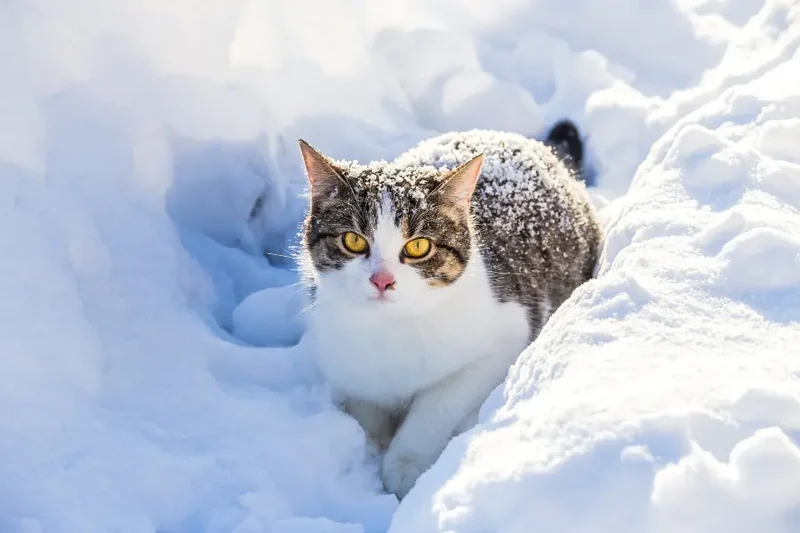
That shivering cat on your porch or the feral tom darting through a snowy yard tugs at your heartstrings. You worry, and rightfully so. While cats are resilient creatures, they are not impervious to the deadly effects of cold. The question isn’t just about comfort; it’s about survival. So, what temperature is truly too cold for an outdoor cat?
The straightforward answer is that anything below 45°F (7°C) becomes uncomfortable and risky for most cats, and conditions at or below freezing (32°F / 0°C) are life-threatening, especially when combined with wind or moisture.
But the real story is far more nuanced. This ultimate guide goes beyond a simple number. We’ll dive into the science of feline thermoregulation, teach you to read the invisible dangers of wind chill, and provide you with actionable, lifesaving strategies you can implement today.
Quick Summary: Key Takeaways
- The 45°F Threshold: Below this temperature, cats begin to use extra energy to stay warm, and prolonged exposure becomes risky.
- Freeering is a Crisis: At 32°F (0°C), the risk of hypothermia and frostbite escalates dramatically. This is a medical emergency.
- Wind Chill is the Real Killer: A 30°F day with a 10 mph wind feels like 21°F to a cat. Always check the “feels like” temperature.
- Wetness is a Death Sentence: A damp coat loses almost all its insulating properties. A cat caught in rain or sleet is in extreme peril, even in mild cold.
- Shelter is Non-Negotiable: A proper shelter is dry, draft-free, insulated, and just big enough for the cat to curl up in (to trap body heat).
- Calories are Fuel: Outdoor cats may need up to 2x their normal caloric intake in winter to generate body heat.
- Water is Life: Dehydration is a silent winter threat. A heated water bowl is one of the best investments you can make.
Table of Contents
- The Feline Furnace: How Cats Regulate Body Heat
- The Critical Temperature Guide: From Chilly to Critical
- Beyond the Thermometer: The 5 Factors That Change Everything
- Reading the Signs: Hypothermia and Frostbite Symptoms
- Your Winter Action Plan: 5 Lifesaving Strategies
- Building a Winter Fortress: DIY Shelter Plans
- Frequently Asked Questions (FAQ)
1. The Feline Furnace: How Cats Regulate Body Heat
It’s a myth that a cat’s fur is a perfect winter coat. Cats are homeotherms, meaning they must maintain a core body temperature around 101.0°F to 102.5°F. When the environment drops below their “thermoneutral zone” (roughly 86°F), their body must work to produce heat.
They do this by:
- Metabolizing Food: This is their primary heat source. Calories are converted into energy and body heat.
- Seeking Warmth: You’ll see them basking in any patch of sun or curling into a tight ball to conserve heat.
- Piloerection: Fluffing their fur traps a layer of warm air close to their skin, much like a puffy jacket.
- Shivering: This is an involuntary muscle reaction that generates heat, but it burns a massive amount of energy.
Understanding this is key. An outdoor cat is essentially burning fuel to stay alive. If they run out of fuel (food) or the cold overwhelms their ability to produce heat, their core temperature drops, leading to hypothermia.
2. The Critical Temperature Guide: From Chilly to Critical
While every cat is different, use this layered temperature guide to assess the risk level. Remember, this is for dry conditions.
| Temperature Range | Risk Level | Actions & Implications |
|---|---|---|
| 45°F (7°C) and above | Low | Generally safe for healthy, acclimated cats. Always provide shelter as a refuge. |
| 32°F – 45°F (0°C – 7°C) | Moderate / High Alert | Dangerous for kittens, seniors, and sick cats. All cats require a proper, insulated shelter. Hypothermia risk is present. |
| 20°F – 32°F (-7°C – 0°C) | High / Danger | Life-threatening for all cats. Frostbite on ears, paws, and tail can occur within 30 minutes. Shelter is critical. |
| 20°F (-7°C) and below | Extreme / Critical | A life-threatening emergency. Bring cats into a garage, basement, or bathroom if possible. Even a shelter offers limited protection. |
According to the American Veterinary Medical Association (AVMA), it’s a common misconception that pets can withstand cold weather better than humans. Once temperatures drop, your pets need a plan.
3. Beyond the Thermometer: The 5 Factors That Change Everything
The number on your weather app is only half the story. These factors can make a 35°F day feel like 15°F to a cat.
- Wind Chill: This is the biggest threat. Wind strips away the thin layer of warm air trapped in their fur. A 15 mph wind at 35°F has a wind chill of 25°F, moving it from moderate to high risk.
- Dampness and Precipitation: A wet cat is a freezing cat. Moisture soaks through the fur, destroying its insulation. Rain, sleet, and wet snow are extremely dangerous.
- Coat and Health: A thick-furred Norwegian Forest Cat is better equipped than a thin-coated Siamese. Underlying health issues like kidney disease, arthritis, or hyperthyroidism impair a cat’s ability to self-regulate temperature.
- Body Condition and Age: Body fat provides insulation. A skinny cat has none. Kittens lose heat rapidly, and senior cats often have poorer circulation.
- Acclimatization: A cat that lives outdoors year-round in Maine will be more adapted to cold than an indoor-only cat who accidentally gets locked out in Georgia.
4. Reading the Signs: Hypothermia and Frostbite Symptoms
Knowing these signs can save a life. If you see any of these, the cat needs immediate warming and likely veterinary care.
Hypothermia (Dropping Core Temperature):
- Mild: Strong shivering, cold ears and paws, reluctance to move.
- Moderate: Lethargy, weakness, stumbling, confusion. The skin feels cold to the touch.
- Severe: Muscle stiffness, loss of coordination, shallow breathing, collapse, and a loss of consciousness. Shivering may stop—this is a critical sign that the body can no longer produce heat.
Frostbite (Tissue Freezing):
Frostbite is often not noticed until the damaged tissue thaws. Look for:
- Pale, gray, or blueish skin on the ear tips, paw pads, or tail.
- The area will feel cold and hard.
- As it thaws, the skin may become red, swollen, and painfully blistered.
5. Your Winter Action Plan: 5 Lifesaving Strategies
If you care for an outdoor cat, these are not suggestions; they are necessities.
- Provide Superior Shelter: The shelter must be just big enough for the cat to curl up in. Too large, and their body heat can’t warm the space. Use a sturdy plastic bin with a small entrance or a purpose-built outdoor cat house. Elevate it a few inches off the ground.
- Choose Bedding Wisely: Straw is king. It repels moisture and provides excellent insulation. Never use blankets, towels, or hay in an outdoor shelter, as they absorb moisture and freeze.
- Fuel Their Furnace: Increase their food supply significantly. Offer high-calorie, high-protein wet food twice a day. Canned food also provides vital moisture. A 2022 study in the Journal of Animal Physiology confirmed that cats in cold environments require a marked increase in dietary energy.
- Prevent Dehydration: A cat cannot eat snow to get enough water; it lowers their body temperature. Use a heated plastic water bowl (not metal, which transfers cold) and check it twice daily.
- Perform a “Cat Check”: Before starting your car, bang on the hood and honk the horn. Cats seek warmth in engine bays and wheel wells. Also, check sheds and garages before closing them up.
6. Building a Winter Fortress: DIY Shelter Plans
You can build an effective, inexpensive shelter in 20 minutes.
What You Need:
- One large plastic storage bin (at least 20-gallon)
- One smaller bin that fits inside with a 1-2 inch gap on all sides
- Packing tape or duct tape
- A box cutter
- Straw for insulation
Instructions:
- Line the larger bin with a thick layer of straw.
- Place the smaller bin inside the larger one.
- Fill the gap between the two bins completely with more straw. This is your insulation layer.
- Tape the two lids together.
- Cut a 6-inch diameter entrance in one side of the double-walled bin. Avoid placing it in the center; a corner entry is less drafty.
- Line the entrance with duct tape to prevent sharp edges and place the shelter in a protected location, facing away from the prevailing wind.
7. Frequently Asked Questions (FAQ)
1. My cat absolutely refuses to come inside. What can I do?
Provide the best possible shelter in a quiet, protected area. Ensure they are spayed or neutered, as this reduces roaming and increases their desire for a safe home base. A garage or enclosed porch is a great compromise.
2. Are heated cat beds safe for outdoor use?
Only use products specifically rated for outdoor and moisture-prone environments. Look for beds with chew-resistant cords and thermostats that prevent overheating. Always follow manufacturer instructions meticulously.
3. What’s the difference between straw and hay?
Hay is for eating; it’s a grass that is harvested green and is mold-prone. Straw is for bedding; it’s the dry stalk of grain plants after the grain is removed. It is hollow, which makes it water-repellent and highly insulating.
4. Can I use a lamp or space heater in a cat shelter?
This is extremely dangerous and a major fire hazard. The risk of electrocution, burns, and fire is too high. Focus on passive insulation (straw) instead.
5. How can I tell if a community cat is being cared for?
Look for a tipped ear (a universal sign of a neutered/vaccinated feral cat), a healthy body condition (not bony), and knowledge of a specific feeding location. If in doubt, provide a shelter and water.
6. Should I try to force a feral cat indoors?
For truly feral cats, being forced inside a home is incredibly stressful and can be dangerous for both of you. A secure, insulated outdoor shelter with a consistent food and water source is the most humane solution.
7. What if my outdoor cat’s water keeps freezing?
A heated bowl is the only reliable solution. As a temporary measure, use a deep, thick plastic bowl (it freezes slower) and refill it with warm water at least twice a day.
8. Do paw balms actually work?
Yes. Paw balms or waxes create a protective barrier against ice, snow, and harmful de-icing salts. Massage it into their paw pads before they go out.
9. How long can a cat survive in below-freezing temperatures?
There is no safe timeframe. Survival depends on the factors listed above, but hypothermia can set in within hours, and death can follow soon after. It is a gamble with their life.
10. What should I do first if I find a cat with severe hypothermia?
Wrap them in warm (not hot), dry towels. You can use warm water bottles wrapped in towels, placing them against their torso. Do not rub them, as this can damage frozen tissue. Get them to a veterinarian immediately. Rewarming must be controlled and monitored.


