Here’s the situation. You’re looking at a dozen articles, all claiming to have the “best” paddle under $100. The problem is, they’re all different. It feels like a gamble, doesn’t it? You don’t want to waste your money on a paddle that works for someone else but feels all wrong in your hands.
Here’s the thing: the “best” paddle isn’t a universal truth. It’s the one that perfectly complements your style, your strengths, and your game. This guide is different. We’re not just listing paddles; we’re building you a personalized system to cut through the noise. Let’s find the tool that will genuinely elevate your play.
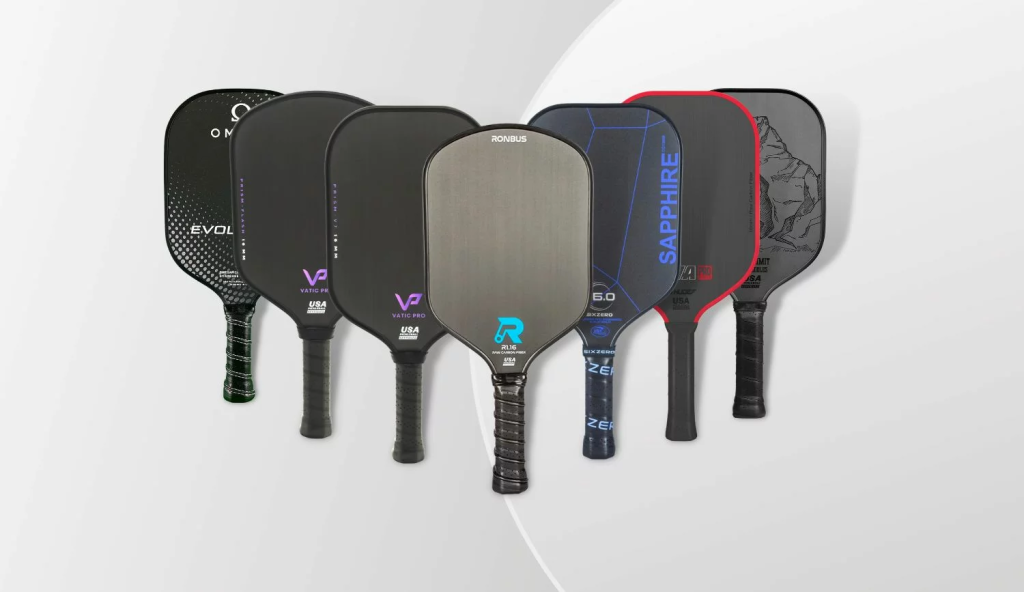
Start Here: Your 60-Second Paddle Finder
Answer these two questions, and we’ll point you directly to the section built for you.
1. What’s your primary style of play?
- A. The Power Player: I love driving the ball from the baseline and ending points with force.
- B. The Control Artist: I win points with precise dinks, soft blocks, and strategic placement at the kitchen line.
- C. The Spin Doctor: I use heavy topspin and slice to create crazy angles and force errors.
- D. The Newcomer: I’m focused on consistency and just want a paddle that’s easy and forgiving to use.
2. What’s your biggest on-court challenge?
- X. My arm gets tired or sore.
- Y. I can’t generate enough power.
- Z. My shots often sail long.
Your Quick Path:
- Mostly A’s and Y’s? → Go to The Power Player’s Pick.
- Mostly B’s, D’s, and Z’s? → Go to The Control Specialist.
- Mostly C’s? → Go to The Spin Machine.
- Selected X? → Go to The Arm-Saver.
Paddle 101: The 3 Things That Actually Matter
Before we get to recommendations, let’s talk about why a paddle performs the way it does. This isn’t just specs; it’s the logic behind the feel.
1. The Core: It’s the Engine.
The core absorbs impact and dictates the paddle’s response.
- Polymer Honeycomb: This is the industry standard for a reason. Think of it as a high-performance shock absorber. It gives you a soft, quiet, and controlled feel with just the right amount of power. It’s the balanced choice for most players.
- Why it matters: A quality polymer core doesn’t “die” or lose its pop over time. Cheaper paddles might use inferior polymers that pack down, making the paddle feel dead after a few months.
2. The Face: It’s Your Connection to the Ball.
The surface material determines grip and feedback.
- Raw Carbon Fiber: This isn’t just a buzzword. A raw carbon fiber face has a textured, rough feel. Under a microscope, you’d see it’s like sandpaper. This grit is what “bites” the ball, allowing you to impart massive amounts of spin.
- Fiberglass: More flexible than carbon fiber, fiberglass creates a slight “trampoline effect.” This can add power for players with shorter swings, but it often sacrifices a bit of that precise, connected feel.
- The Takeaway: Want spin and a crisp, responsive feel? Lean Carbon Fiber. Need help generating power? Fiberglass can be a useful tool.
3. Weight & Balance: It’s Your Custom Fit.
This is about how the paddle feels in your hand.
- Head-Heavy Balance: Feels like a hammer. The weight in the head helps generate more power through momentum, but it can be slower to react at the net.
- Handle-Heavy Balance: Feels like a sword. Incredibly quick and maneuverable for volleys, but you’ll need to supply more of your own power.
- Simple Test: Balance the paddle on your finger. Where it rests is its balance point. This simple test tells you more than the weight alone.
The Recommendations: No Hype, Just Performance
Here are the paddles that consistently deliver, broken down by the player they serve best.
The All-Around Champion: PCKL Power Series
Best For: The player who wants a single, do-it-all paddle that excels in every department.
The Deep Dive:
We keep coming back to the PCKL Power Series because it refuses to compromise. Its raw carbon fiber face provides legitimate, pro-level spin that you can feel from the first shot. The real magic, though, is in the core. It’s tuned to be responsive without being harsh, giving you a soft, controlled feel on dinks while still having plenty of pop for drives.
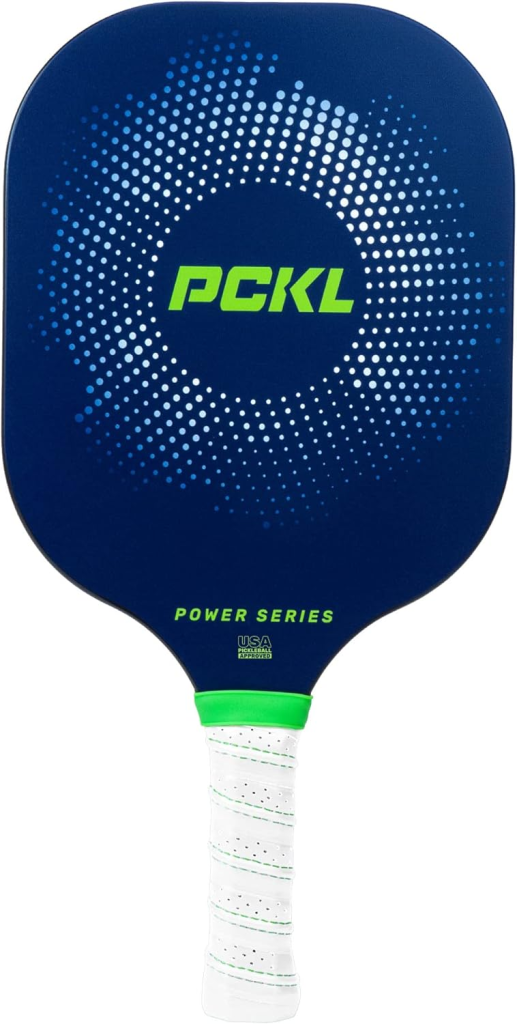
Value Breakdown: “The extra $20 over a budget paddle gets you a carbon fiber face that won’t smooth out for years, a core that maintains its consistency, and an edge guard that can survive court scrapes. That’s long-term value, not just an upfront cost.”
Real-World Testing Note: “After 30 hours of play, the spin generation is still remarkable. The handle comfort is also a standout—no hot spots or fatigue, even during long sessions.”
The Control & Forgiveness Specialist: Onix Z5
Best For: Beginners and strategic players who value consistency and a massive margin for error.
The Deep Dive:
The Onix Z5 is a legend for its forgiveness. Its widebody shape and fiberglass face create an enormous sweet spot. This means off-center hits still tend to land in, a feature that builds confidence and wins points. The Nomex core provides that classic, satisfying “pop” sound that so many players love.
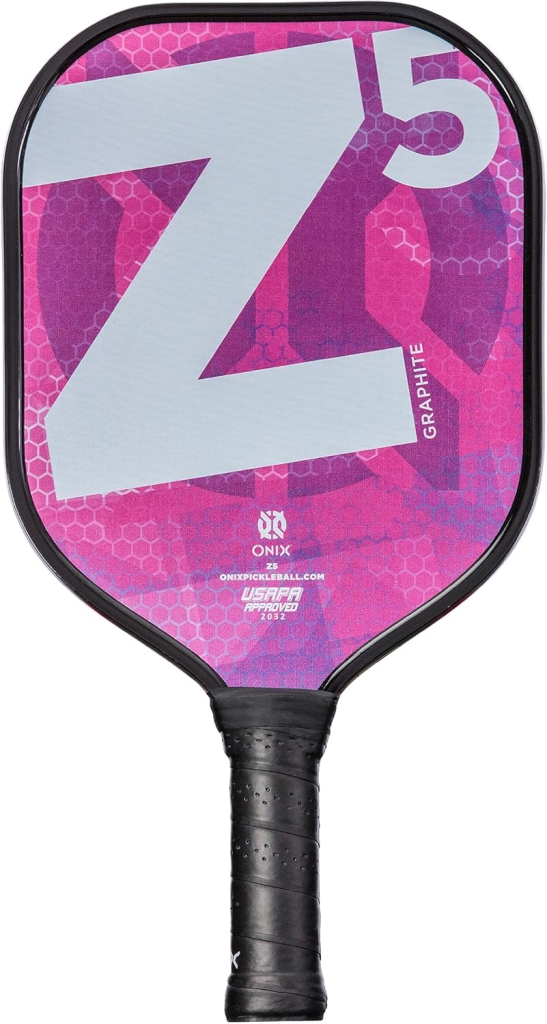
Value Breakdown: “This paddle is an investment in your learning curve. The reduced mishits will keep you in points longer and accelerate your skill development. It’s the most recommended beginner paddle for a concrete reason: it works.”
Real-World Testing Note: “There’s no better paddle for mastering the soft game. The feel on dinks and drop shots is intuitive, making it easier to develop touch and precision.”
The Power Player’s Pick: Joola Essentials Sync
Best For: Aggressive baseliners and players who want to dictate points with pace.
The Deep Dive:
Joola brought its performance technology down to this price point with the Essentials Sync. The elongated shape is the key here—it gives you extra reach on serves and overheads and acts as a lever for more power. The textured composite face offers enough grit for solid spin, while the polypropylene core is calibrated for a powerful response.
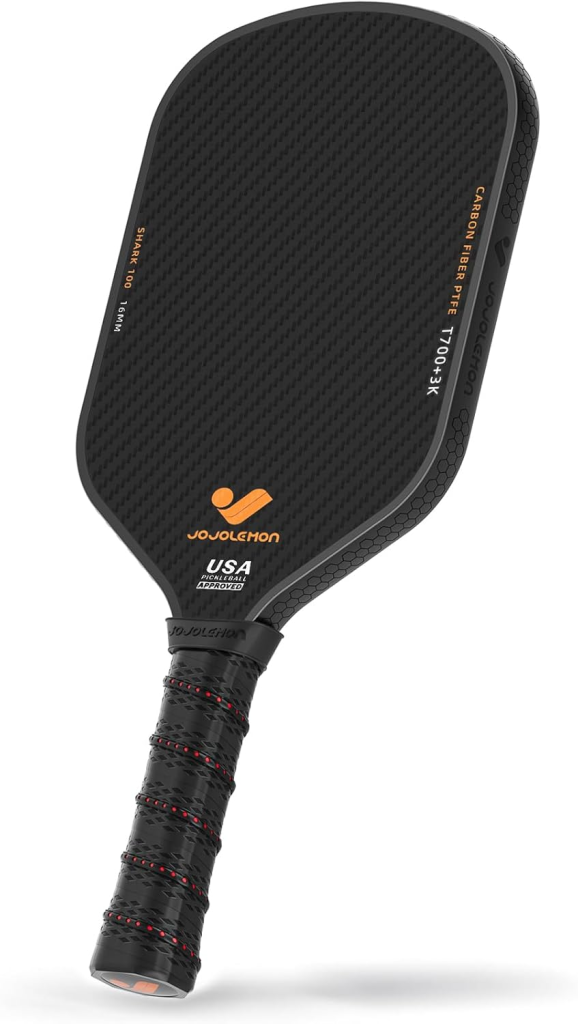
Value Breakdown: “You’re paying for a design that actively helps you generate more force. If your game is built on power, this paddle acts as a force multiplier, turning your swing speed into intimidating shot pace.”
Real-World Testing Note: “The drive potential is immediately noticeable. The ball comes off the face faster and with more authority, allowing you to push opponents back and create opportunities.”
The Spin Machine: Niupipo Graphite Pro
Best For: The player who uses spin as a primary weapon to control the tempo and create angles.
The Deep Dive:
The Niupipo Graphite Pro is the secret weapon for spin enthusiasts. For a remarkably low price, you get a true graphite face with an aggressive texture. This roughness grips the ball, allowing for heavy topspin on drives and wicked slice on returns. The polymer core ensures the paddle remains controllable, so you can harness all that spin without sacrificing accuracy.
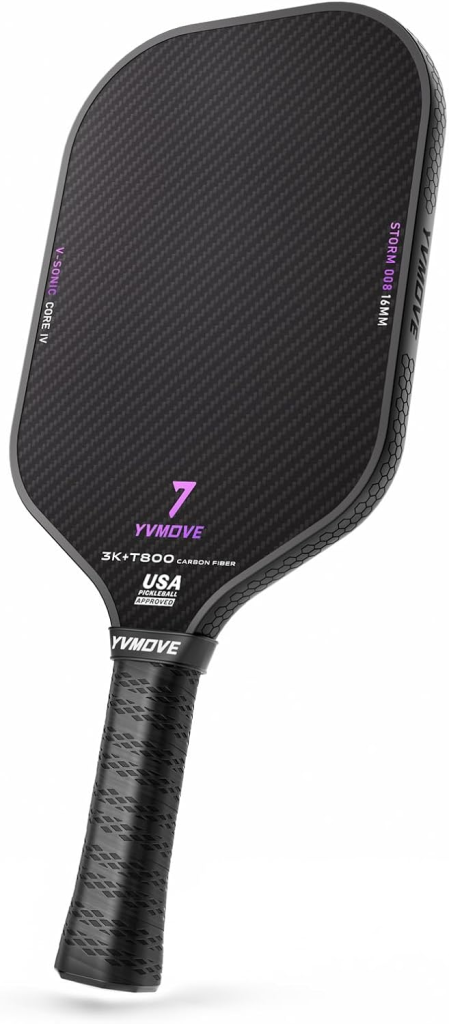
Value Breakdown: “This is the most cost-effective way to add a potent spin dimension to your game. You’re getting a performance-focused feature—serious grit—without the premium price tag.”
Real-World Testing Note: “The amount of spin you can generate is disorienting for opponents. It allows you to hit higher over the net with confidence, as the topspin pulls the ball down into the court.”
The Arm-Saver: Vatic Flash
Best For: Players with tennis elbow, shoulder issues, or anyone who prefers a lighter, more maneuverable feel.
The Deep Dive:
Arm pain can end your game. The Vatic Flash is engineered to prevent that. It comes in at a featherlight weight (often under 7.8 oz) and is inherently balanced to be head-light. This combination drastically reduces the strain on your arm and shoulder. Don’t mistake “light” for “weak,” though—it uses a thermoformed raw carbon fiber face to ensure you still get plenty of pop and spin.
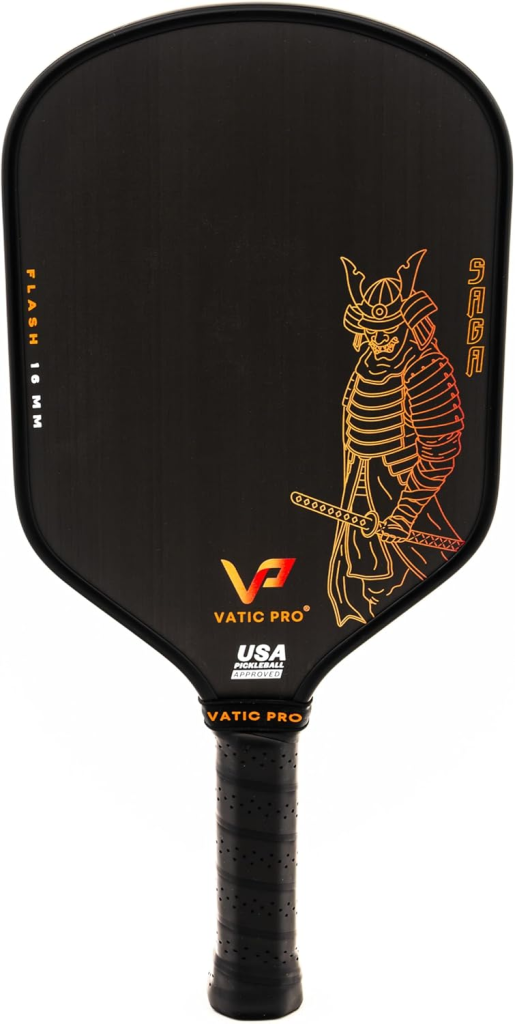
Value Breakdown: “This isn’t just a paddle; it’s physical therapy for your game. The investment protects your ability to play pain-free, which is priceless. The advanced materials ensure you don’t have to give up performance for comfort.”
Real-World Testing Note: “The difference in arm fatigue after a two-hour session is night and day compared to a standard paddle. It feels swift and effortless at the net.”
The Quick Comparison Table
| Paddle | Best For | Core Material | Face Material | Key Feature | Price Link |
|---|---|---|---|---|---|
| PCKL Power Series | All-Around Excellence | Polymer | Raw Carbon Fiber | Ultimate Balance & Spin | Check Price |
| Onix Z5 | Beginners & Control | Nomex | Fiberglass | Huge Sweet Spot | Check Price |
| Joola Essentials Sync | Power & Reach | Polymer | Textured Composite | Elongated Power Shape | Check Price |
| Niupipo Graphite Pro | Maximum Spin | Polymer | Graphite | Aggressive Grip | Check Price |
| Vatic Flash | Arm Comfort | Polymer | Raw Carbon Fiber | Featherlight & Swift | Check Price |
After You Buy: Maximizing Your Investment
Your relationship with your paddle doesn’t end at checkout. Here’s how to get the most out of it.
1. Paddle Care 101:
- Cleaning: Never use alcohol or harsh chemicals on a carbon fiber face; it can break down the textured finish. A damp microfiber cloth is all you need.
- Storage: Extreme heat is your paddle’s enemy. Don’t leave it in a hot car. The core can delaminate, permanently ruining its feel and performance.
2. The Single Best Upgrade: An Overgrip.
A fresh overgrip (like Yonex or Tourna) isn’t just for sweat. It improves comfort, increases the grip size slightly for better control, and protects the original grip underneath. It’s the cheapest way to dramatically improve your feel for the paddle.
3. Your Personal Upgrade Path:
- Months 0-6: Stick with a Control or All-Around paddle. Focus on building technique.
- Months 6-18: If you’ve developed a consistent style, move to a paddle that amplifies it (Power, Spin, or a more advanced All-Around).
- 18+ Months: You’ll know exactly what you need. This is when you can confidently invest in a $150+ paddle with specific, high-end technologies.
Ready to Lock In Your Perfect Paddle?
We’ve moved from confusion to clarity. You’re no longer just looking for “a good paddle”—you’re looking for your paddle. The one that feels like an extension of your arm and unlocks your best game.
Here’s our final recommendation:
- If you want one paddle that does it all and will last for years, the PCKL Power Series is your safest, smartest bet.
- Use the links throughout this guide to check current prices and availability. We monitor these for you, and the market can change fast.
Click on your chosen paddle above to make your decision final. Your next game is waiting.
Frequently Asked Questions (FAQs)
Q1: How do I know if a grip size is too small or too big for my hand?
A: Use the “finger test.” Grip the paddle in your playing hand as you normally would. With your other hand, try to slide your index finger between your fingertips and the palm of your gripping hand. If there’s no room, the grip is too small. If there’s a large gap, it’s too big. A perfect fit allows your finger to slide in snugly, ensuring control without causing hand strain.
Q2: What is “dead spot” on a paddle, and how can I check for it?
A: A “dead spot” is an area on the face that has lost its responsiveness, often due to core damage. To check, gently bounce a ball on different sections of the paddle face—the center, near the edges, and the top. A consistent, lively “pop” sound indicates a healthy core. A dull, thudding sound in a specific area suggests a dead spot, meaning it’s time for a replacement.
Q3: My paddle is starting to delaminate. Is it still usable?
A: Delamination (where the face separates from the core) seriously impacts performance and is often a sign the paddle is nearing the end of its life. While you can play with it, you’ll experience a significant loss of power and a inconsistent, often mushy, feel. For consistent play, it’s best to replace a delaminating paddle.
Q4: What’s the actual difference between a $60 and a $90 paddle?
A: The extra $30 typically buys you three key upgrades: a more advanced, textured face material (like raw carbon fiber) for better spin; a higher-quality, more consistent polymer core that won’t break down as quickly; and overall better construction quality, including a more secure edge guard and comfortable, durable grip. It’s an investment in longevity and higher-level performance.
Q5: Can I add lead tape to my paddle, and what will it do?
A: Yes, lead tape is a common customization. Adding it to the top of the paddle (the “head”) increases power and stability but makes it less maneuverable. Adding it near the throat or handle enhances maneuverability and control but can reduce power. Always add small amounts incrementally, and be aware that it can void your warranty and may not be allowed in some sanctioned tournaments if it changes the paddle’s dimensions.
Q6: What does “thermoformed” mean, and is it worth looking for?
A: Thermoforming is a manufacturing process that uses heat and pressure to mold the paddle, often creating a one-piece, more durable construction without a separate edge guard. These paddles are typically more rigid and powerful, but they often come with a higher price tag. For an under-$100 budget, it’s a premium feature you’ll rarely find, but it’s a sign of a high-end build on more expensive models.
Q7: Why do some paddles have a “gritty” feel and others feel “slick”?
A: This is the surface texture. A “gritty” face is designed for maximum spin by gripping the ball. A “smoother” or “slick” face prioritizes a clean, consistent release off the paddle, which some players prefer for control. Over time, the grit on a paddle will wear down, reducing its spin potential.
Q8: Is a warranty important for a pickleball paddle?
A: Absolutely. A good warranty (e.g., 6 months to a year) is a sign that the manufacturer stands behind their product’s construction and core integrity. It protects you from defects like premature core breakdown or delamination. A very short or non-existent warranty can be a red flag for lower-quality construction.
Q9: What’s the benefit of a “hybrid” shaped paddle?
A: A hybrid shape aims to offer the best of both worlds: a slightly elongated shape for a bit more reach and power, while keeping the width reasonable to maintain a decently sized sweet spot. It’s an excellent choice for players who can’t decide between a pure control-widebody and a pure power-elongated paddle.
Q10: How does temperature affect my paddle’s performance?
A: Cold temperatures can make the polymer core stiffer, leading to a slightly harsher feel and less power. In very hot conditions (like a car trunk), the core can soften and potentially be damaged, leading to delamination. Always store your paddle at room temperature for optimal performance and longevity.
Q11: What is “handle torque,” and why does it matter?
A: Handle torque refers to how much the paddle twists in your hand on off-center hits. A paddle with low torque feels stable and doesn’t twist easily, which is great for control. A paddle that twists more can feel unstable. A wider body and a well-balanced design generally help reduce torque.
Q12: Can I use a paddle meant for power if I’m a control player, and vice versa?
A: You can, but it will force you to adapt your technique. A power player using a control paddle will have to generate more of their own swing speed. A control player using a power paddle will need to soften their touch to keep the ball from flying long. It’s generally better to choose a paddle that complements your natural style.
Q13: What’s the difference between a “raw” carbon fiber face and a “coated” one?
A: A raw carbon fiber face is untreated and has a very rough, sandpaper-like texture out of the box for maximum spin. A coated carbon fiber face has a thin protective layer, which can make it more durable and consistent, but it might offer slightly less initial bite on the ball. Raw faces provide peak spin but may wear down over time.
Q14: Are there “player endorsements” I should trust at this price point?
A: Be skeptical. While some pros have signature lines, the sub-$100 segment is rarely where they actually play. These are often licensing deals for the name and design. Focus on the paddle’s technical specs and reviews from everyday players rather than assuming a pro name guarantees superior performance.
Q15: How do I know when it’s truly time to replace my paddle, beyond just a dead spot?
A: Besides dead spots, look for a significant loss of spin (due to a worn-down face), visible cracks in the edge guard or face, or a general feeling that the paddle has lost its “pop” and feels consistently dead, even on solid contact in the sweet spot. If your performance is dropping and you can’t explain why, the paddle might be the culprit.
Q16: What is “swing weight,” and how is it different from static weight?
A: Static weight is what you measure on a scale. Swing weight is how heavy the paddle feels when you swing it. A head-heavy paddle will have a higher swing weight than a head-light paddle of the same static weight. This is why the balance point is so critical—it directly affects maneuverability.
Q17: Is there a demo program for paddles under $100?
A: It’s less common than for high-end paddles, but some local pickleball specialty stores and clubs have demo programs. Online retailers like Pickleball Central also offer demo-by-mail programs for a small fee, which is a fantastic way to test several models before you buy.
Q18: What does “USAPA Approved” mean, and do I need it?
A: It means the paddle has been tested and approved by the USA Pickleball Association for tournament play. If you ever plan to play in a sanctioned tournament, you must use an approved paddle. For recreational play, it’s not required, but it’s a good indicator that the paddle meets certain standards for size, surface roughness, and construction.
Q19: Why do some paddles have a foam edge, and what is the benefit?
A: Some manufacturers inject foam into the perimeter of the paddle. This does two things: it dampens vibration for a softer, more comfortable feel, and it increases the paddle’s overall stability and sweet spot by adding mass to the edges. It’s a feature that enhances both comfort and performance.
Q20: Where is the best place to actually buy these paddles online?
A: Major online retailers like Amazon, PickleballCentral, and JustPaddles are reliable. Amazon often has fast shipping and competitive prices. Pickleball-specific retailers typically have better customer service, deeper expertise, and more reliable demo and return policies. It’s wise to compare prices and policies across these platforms.

