Quick Summary — 6 key takeaways
- Best general choice: For most exterior patios and porches, a 100% acrylic masonry/concrete paint gives the best balance of weather resistance, ease of use and color retention.
- High-traffic surfaces: For driveways, garages or heavy-use areas choose a multi-part epoxy system with a polyurethane/urethane topcoat for UV resistance and abrasion resistance — epoxy systems last ~10–20 years in residential settings when done correctly.
- Stain vs paint: Stains/penetrating systems are more breathable and often longer-lasting on exterior concrete than surface paints because they don’t form a film that traps moisture. Use paint when you want opaque, consistent color.
- Surface prep is everything: Most coating failures are caused by poor prep (contaminants, moisture, weak concrete). Follow a disciplined clean → repair → etch → prime workflow.
- Anti-slip solutions: Add graded aggregates (aluminum oxide, silica, colored quartz) or non-slip additives to the topcoat—choose particle hardness and mesh size based on traffic.
- Plan for maintenance: Expect to touch up acrylic porch paints every 2–5 years; epoxy/urethane systems will far outlast them but require correct installation and occasional recoating.
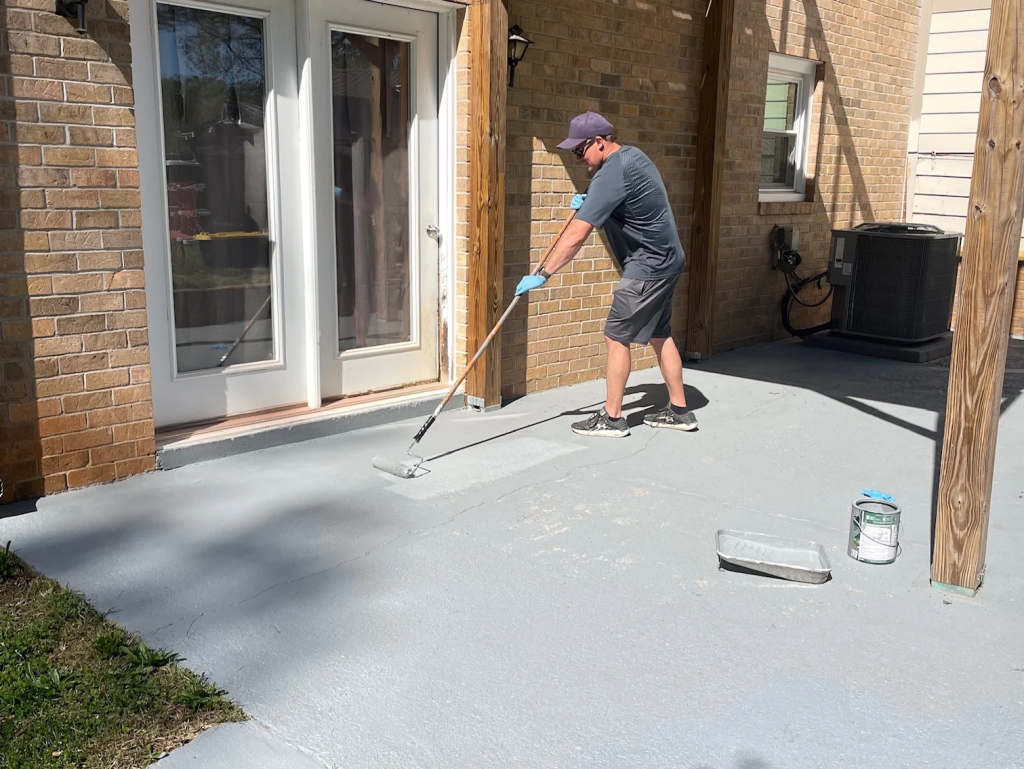
Table of contents
- Quick Summary
- Why the right paint/coating matters (short)
- Paint, stain, sealer, coating — how they differ
- Which coating is best by use-case (patio / porch / driveway / garage / wall) — detailed recommendations
- How to choose: the decision checklist (6 key filters)
- Surface prep — exact step-by-step (with times & products to consider)
- Application techniques & common pitfalls (brush, roll, spray)
- Anti-slip strategies (materials, placement, appearance tradeoffs)
- Durability, lifespan & what to expect (numbers & maintenance schedule)
- Cost & coverage estimates (practical table)
- Quick troubleshooting guide (peeling, efflorescence, hot-tire, etc.)
- Product/system recommendations (by tier)
- 18–25 FAQ (unique, targeted questions)
Why choosing the right paint/coating matters
Outdoor concrete faces UV, freeze-thaw, moisture vapor, dirt, oil and abrasion. The wrong product—or correct product applied poorly—will blister, flake or get slippery and force a premature redo. Good product + professional surface prep + right finish = years of service; skip any of those three and the weakest link fails first. (See surface-prep section for why prep is the #1 factor.)
Paint vs stain vs sealer vs coating — short technical primer
- Acrylic masonry/concrete paint (100% acrylic): Forms a flexible film that resists fading and is easy to apply. Best for low- to medium-traffic patios and porches. Easy to recoat, good color options.
- Epoxy (multi-part) systems: Thermoset films with excellent abrasion and chemical resistance. Great for garages and heavy-use floors but can yellow in sunlight unless topcoated with UV-stable urethane. Requires careful moisture and temperature control during installation.
- Urethane/polyurethane topcoats: Often used over epoxies to give UV stability and abrasion resistance. Useful where sun exposure would discolor epoxy alone.
- Concrete stains (acid or water-based penetrating stains): Not film forming — they dye the concrete and remain breathable. Excellent long-term aesthetics and lower risk of delamination on exterior concrete.
- Sealants (penetrating vs film-forming): Penetrating silicate or silane sealers preserve breathability and can last years; film-forming acrylic sealers offer sheen and color protection but may need reapplication sooner.
Which coating is best — by use-case
| Use case | Recommended system | Why (short) | Lifespan (typical) |
|---|---|---|---|
| Decorative patio, low traffic | 100% acrylic masonry/concrete paint or translucent stain | Good color retention, easy DIY | 2–5 years (maintenance every few seasons) |
| Porch, entry steps | Acrylic + non-slip additive | Balance of looks + traction | 2–4 years (touch-ups) |
| Garage floors, light vehicle traffic | 100% solids epoxy + urethane topcoat | Excellent abrasion & chemical resistance | 10–20 years (residential) |
| Driveways / heavy vehicles | Solid color water-based driveway enamel or heavy-duty epoxy systems | Hot-tire pickup and abrasion resistance | 5–15 years depending on system & climate |
| Exterior walls/retaining walls | Breathable masonry paint or penetrating coatings | Allows moisture vapor transmission (prevents blistering) | 5–10+ years depending on exposure |
Notes: Lifespan numbers are conditional on substrate, prep, exposure and traffic. Epoxy lifespans cited from recent industry guidance.
How to choose — 6-point decision checklist
- Traffic level: foot vs vehicle vs heavy equipment. If vehicle, default to epoxy/driveway enamel.
- Sun & UV exposure: if full sun, avoid UV-sensitive topcoats (or apply urethane topcoat).
- Moisture & vapor: test for rising moisture (plastic sheet test). If moisture is present, prefer breathable stains/penetrating sealers; painting over active moisture causes failure.
- Desired look: opaque uniform color → paint; natural concrete look → stain.
- Slip requirement: stairs, pool decks or ramps need anti-slip aggregates or textured coatings. Choose aggregate hardness per expected wear.
- Budget & maintenance tolerance: acrylic is lower cost and easier DIY; epoxy systems cost more but reduce frequency of full reworks.
Surface prep: exact step-by-step
- Age & dryness check: New concrete should cure ~28 days before coating; older slabs must be dry-to-touch. (Concrete absorbs and releases moisture — if fresh, wait.)
- Clean: Remove oil, grease, algae, paint residue. Use a degreaser or trisodium phosphate (TSP) product followed by pressure washing at 2,500–3,000 psi where appropriate. Let dry 24–72 hours.
- Test for contaminants: Water beading indicates surface contaminants; repeat cleaning until water wets the slab.
- Repair: Fill cracks with polymer-modified concrete repair or vinyl patch; for hairline cracks consider flexible caulk if movement is expected.
- Etch or mechanical profile: For dense concrete or older slabs, acid etch (muriatic) or mechanical grinding/shot blasting creates the proper profile for adhesion. Epoxy systems typically require a CSP (concrete surface profile) of 2–3 (industrial guidance).
- Moisture test: Use a plastic sheet taped down for 24‒48 hrs; visible condensation or darkening indicates vapor drive—do not apply film-forming coatings if moisture is present.
- Prime when specified: Many systems require a primer (epoxy primers, bonding primers) to block alkali and promote adhesion. Follow manufacturer TDS.
Typical timing example (for a well-draining patio): cleaning (1 day) → repairs (1–2 days cures) → etch/grind + drying (1–2 days) → prime and coat (2–3 days) → cure (varies by product). Always follow product TDS.
Application techniques & common pitfalls
- Tools: Use a ¾”–1″ nap phenolic core roller for acrylics on textured surfaces; squeegee + 18″ loop roller or spray for epoxies (professional). Brush for edges.
- Coat thickness: Follow manufacturer for mils (film thickness). Under-film = poor wear; over-film = longer cure and potential for solvent entrapment.
- Temperature & humidity: Most coatings have narrow temperature/humidity windows. Epoxies are especially sensitive: do not apply when substrate < recommended °F or when relative humidity is high.
- Common mistakes: painting over contaminants, not priming, applying in direct midday sun (flash dry), skipping anti-slip in wet areas.
Anti-slip strategies
- Broadcast aggregate into wet topcoat: aluminum oxide (hard, long-lasting), silica sand (balanced), colored quartz (decorative). Choose mesh size 20–70 depending on desired roughness.
- Non-slip additives: polymer beads or fine silica added to finish coat — good for barefoot areas where you need slight traction without a rough texture.
- Patterned texture: apply a thin textured coating or stamped overlay if you want both traction and a decorative surface.
- Practical tip: always test a 1-sq-ft sample to confirm traction and cleaning behavior before full broadcast.
Durability & maintenance — what to expect
- Acrylic concrete paints: expect 2–5 years on exposed horizontal surfaces with moderate wear; touch up sooner in freeze-thaw or heavy sun climates.
- Epoxy + urethane systems: ~10–20 years in residential applications if properly installed (thicker systems and professional installation extend life). Real-world lifespan varies by thickness, exposure and maintenance.
- Penetrating sealers / stains: can last 5–10+ years for many stains and penetrating silicates (some penetrating treatments are effectively long-lasting because they chemically bond).
Maintenance schedule (example): annual cleaning; inspect & spot-repair small chips within 6–12 months; plan for partial recoat of acrylic surfaces every 2–4 years; major recoats for epoxy only when surface shows abrasion or loss of gloss/protection.
Cost & coverage
- Acrylic porch paint: 200–400 sq ft per gallon (one coat) — typical material cost $20–$50/gal.
- Epoxy floor kits (two-part): 150–300 sq ft per kit depending on solids and broadcast — kits often $100–$600+ depending on coverage.
- Aggregate: $10–$30 per 25 lb bag depending on type.
Quick troubleshooting
- Flaking/peeling: usually due to adhesion failure — check prep, remove failed paint, reprofile substrate, prime.
- White powder (efflorescence): salts migrating through concrete — treat with salt remover, improve drainage, use breathable coatings or remove and recoat with appropriate system.
- Hot-tire pickup on driveway: choose hot-tire resistant drive enamel or avoid paint that softens under heat. Test a small area.
- Blistering: often from moisture/vapor or painting in direct sun — remove, dry, and recoat using a breathable or correct system.
Product/system recommendations — tiered approach
- Budget / DIY: Water-based 100% acrylic porch & patio paint (easy application, good color range). Example: acrylic porch & patio products sold at major retailers.
- Best value: Epoxy-modified acrylic or two-part epoxy floor kit with sealer — good balance of DIY capability and durability (consider professional help for large areas).
- Pro / Heavy-duty: 100% solids epoxy mortar broadcast system + urethane topcoat (commercial grade). Use for garages, commercial driveways, heavy equipment areas.
Final checklist before you start
- Concrete cured ≥28 days (if new).
- No active moisture (plastic test).
- Surface clean, profiled and repaired.
- Primer selected per system.
- Weather window (dry days, recommended temperature).
- Anti-slip plan and materials on site.
- Read manufacturer TDS & MSDS for every product.
FAQs
- Can you paint stamped concrete?
Yes—paint will adhere to stamped concrete if the stamp surface is profiled and primed; but breathable stains or penetrating dyes often give more durable, natural finishes on stamped textures. - Will paint hide mildew and mold on outdoor concrete?
Paint can cover surface mildew but does not solve underlying moisture or biological growth; clean with appropriate biocide and ensure good drainage before painting. - How do VOC rules affect my paint choice?
Low-VOC and water-based formulations are widely available for exterior concrete; in many jurisdictions using low-VOC products is required or strongly recommended—check local regulations. - Can I paint over a previous sealer?
It depends—film-forming sealers must be sanded/removed or abraded for adhesion; penetrating sealers may be fine to paint over if surface profile and adhesion tests pass. - Is winter the worst time to paint concrete?
Low temperatures and freeze/thaw cycles complicate curing; most coatings require a minimum substrate temperature and several dry days—avoid winter unless using products rated for low temps. - How many coats do I actually need?
Follow TDS: acrylics often need 1–2 coats; epoxies usually have primer + base + topcoat (2–3 layers) for full protection. - Can painted concrete be power washed?
Yes—most durable coatings tolerate power washing, but avoid too high pressure near edges or flaked areas. Let coatings fully cure first (manufacturer’s cure time). - What’s “hot-tire pickup” and how to prevent it?
Hot-tire pickup is softening or adhesion loss caused by warm tires on certain paints—use hot-tire-resistant drive enamels or solid epoxy systems formulated for vehicle traffic. - Does painting concrete change drainage or slip?
A film surface can reduce micro-roughness; incorporate anti-slip aggregates if slip after painting is a concern. Avoid smoothing over drain patterns. - Can I use exterior house paint on a concrete porch?
Exterior house paints are designed for siding and trim and may not have the abrasion resistance or formulation for horizontal concrete—use products labeled for concrete/porch floors. - How long before I can walk on newly painted concrete?
Often 24 hours for foot traffic with acrylic paints; epoxies and heavier systems may require 24–72 hours or longer to reach handling strength—check product cure charts. - Is priming always required?
Not always, but primers significantly improve adhesion for many systems—especially on old, porous, or previously coated concrete. - Can you paint over painted concrete?
Yes, if old coating is sound. Scuff/sand, clean, and spot prime where necessary. Remove loose, blistered or chalked paint first. - Do darker colors retain heat more on a painted driveway?
Yes—dark colors absorb more solar heat, which can worsen hot-tire pickup on vulnerable coatings. Consider lighter hues or appropriate coatings for driveways. - What tools remove paint failures fast?
Mechanical grinders, shot blasters and professional paint strippers are effective; for small areas, a rotary grinder with diamond cup wheel is common. - Are there warranties for DIY coatings?
Manufacturers usually warranty their product performance when applied per TDS; multi-part systems and professional installations may carry stronger warranties—keep receipts and TDS records. - Can I tint epoxy or concrete paint to custom colors?
Many water-based acrylics and epoxy systems accept universal tints; follow manufacturer colorant compatibilities to avoid cure or performance issues. - Is there a “green” or more breathable option?
Penetrating silicate sealers and water-based stains are lower-VOC and maintain breathability; consider them when moisture vapor is a concern. - How to match painted concrete to adjacent wood decking or siding?
Use color samples on a 2×2 ft patch, examine at different times of day and choose complementary sheens (matte hides imperfections; satin cleans easier). - When is it smarter to hire a pro?
For large areas, vehicle traffic, moisture issues, or when a long-lasting commercial grade system is desired — pros bring the right equipment (shot blasting, humidity meters, industrial primers).