Quick answer — Don’t buy on looks or price alone. The most common ways people end up disappointed are: choosing the wrong capacity, ignoring wattage vs. size, and overlooking cleanability & warranty. Below I give practical, testable checks (including capacity conversion, wattage bands, certifications to look for, and a printable buying checklist) so you won’t waste money or end up cooking in batches forever.
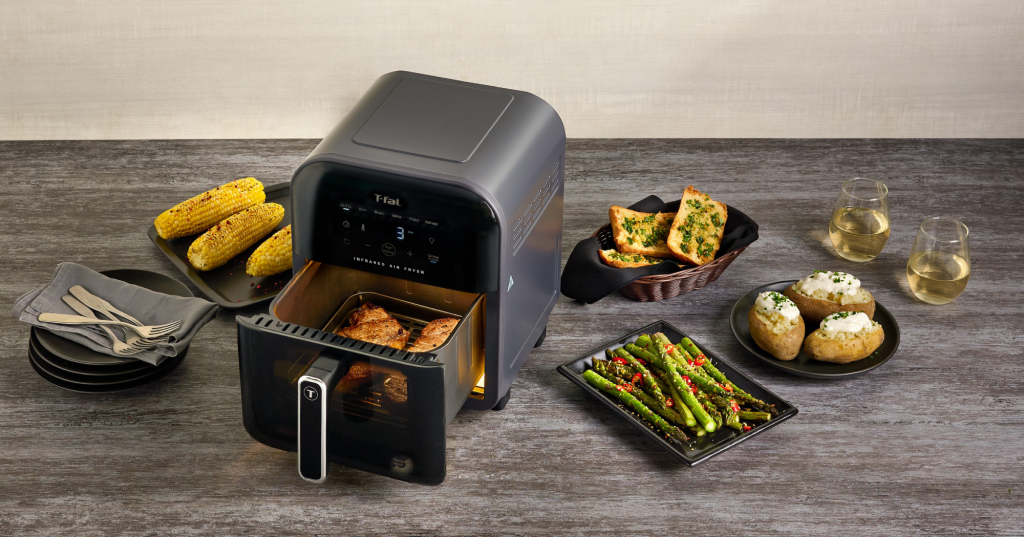
Quick highlights
- Pick capacity based on real food volumes (not staged marketing photos).
- Match wattage to volume: big baskets need higher watts to crisp properly.
- Check how easy the basket and heating area are to clean — it matters every week.
- Don’t treat “air fry” as deep-fry; wet batter and overloaded baskets ruin results.
- Prefer certified, safety-tested models (look for UL/ETL/CE marks) and read warranty fine print.
Who this guide is for
shopping for an air fryer for one of these situations, read this whole page:
- cook for 1–2 people and want something compact.
- You cook for a family and want to avoid batch-cooking.
- You want a reliable appliance that’s easy to clean and backed by support.
- You’re comparing basket-style vs. oven-style (two very different machines).
Decision flow — buy in 3 quick checks
- How many people / what food? → recommended capacity (see table below).
- Is the wattage appropriate for that capacity? → small: ~800–1,300 W; medium: ~1,300–1,700 W; large: 1,800+ W.
- Quick red flags: No safety certification, hard-to-clean parts, sketchy warranty, or product photos that always show a completely full basket.
The 11 things you must avoid (and exactly what to do instead)
1) Avoid: Buying by photo — “look how full that basket is”
Why it’s a trap: Marketing photos cram food to look impressive. Those shots aren’t a real cooking load — they’re staged. If you actually fill a basket that way, air won’t circulate and food will steam, not crisp.
Do this instead: Use the capacity table below to estimate real loads (e.g., a 6-quart basket comfortably fits 3–4 large chicken breasts or a medium whole chicken breast + sides). If your recipe requires a single-full-tray roast, choose an oven-style unit.
2) Avoid: Choosing a large basket with low wattage
Why it’s a trap: Bigger air volumes need more power to reach and hold high temp quickly. A large 10+ qt basket with only ~1,000 W will struggle to crisp; you’ll cook much longer and get soggy results.
Do this instead: Aim for the wattage bands below when matching size and expect better crisping with higher-watt units.
Wattage guidance (practical):
- Small (up to ~3 qt / 3 L): 800–1,200 W — good for singles, reheating.
- Medium (3–6 qt / 3–6 L): 1,200–1,700 W — best balance for couples / small families.
- Large (6+ qt / 6+ L or oven-style): 1,800+ W — needed for a whole chicken or consistent batch cooking.
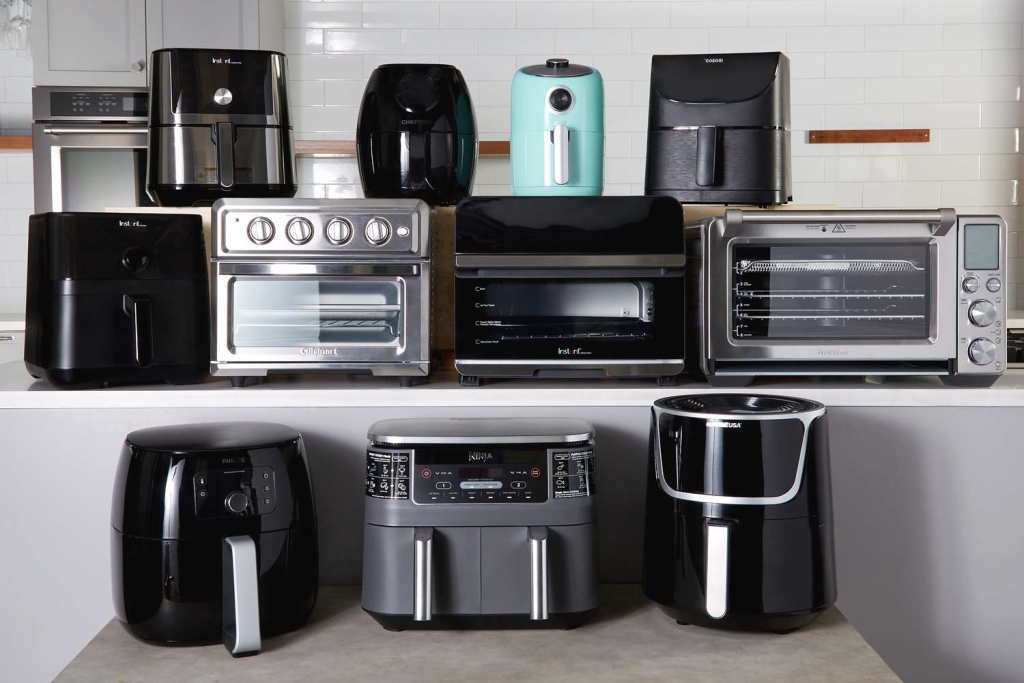
3) Avoid: Not checking what “style” you actually need — basket vs. oven-style
Why it’s a trap: Basket fryers are compact and fast for fries/wings. Toaster-oven-style air fryers are bulkier but handle sheet trays, rotisserie and multi-rack cooking. Buying the wrong shape limits what you can make.
Do this instead: Choose basket if you want quick single-dish crisps; choose oven-style if you want versatility (bake/roast/air-fry whole birds, multiple trays).
4) Avoid: Assuming every nonstick coating is safe or permanent
Why it’s a trap: “Nonstick” is convenient but coatings degrade with scratches/abrasion and some older coatings contained PFOA-type chemicals. While many manufacturers have phased out PFOA, concerns about PFAS and related chemicals persist. Check labels and documentation.
Do this instead: Look for explicit “PFOA-free / PFAS-free” claims and durable stainless-steel or ceramic-lined accessories when possible. Treat scratched nonstick liners as end-of-life items.
5) Avoid: Buying before checking cleaning and maintenance ergonomics
Why it’s a trap: Hard-to-remove baskets, fiddly racks, and lots of seams mean you won’t clean as often as you should — burnt buildup affects flavor and safety. Many owners regret models with mesh baskets that trap crumbs.
Do this instead: Inspect the product photos and manual for dishwasher-safe parts, detachable heating-element guards, and whether the basket has smooth surfaces (not fine mesh).
6) Avoid: Relying only on star ratings — miss the recurring complaints
Why it’s a trap: Overall rating hides recurring problems (fan failures, smoke, short warranties). Look for patterns in long-form reviews: repeated reports of the same defect are a red flag.
Do this instead: Scan for “smoke,” “stopped working,” “noisy,” “warranty” in reviews. If many users mention repair or smoke issues, skip that model.
7) Avoid: Ignoring ventilation and placement needs
Why it’s a trap: Air fryers are fan-forced; they output heat and need space or a heatproof surface. Placing one in a shallow cavity or under cabinets risks heat damage.
Do this instead: Allow recommended clearance around the unit, and use a heatproof board on delicate countertops.
8) Avoid: Buying extras and accessories before you know you’ll use them
Why it’s a trap: Many accessories are branded bundle upsells with limited real value. You don’t need a dozen trays on day one.
Do this instead: Buy core features first — a good basket/oven and a rack. Add specialty pans or rotisserie kits only when you use the base machine enough to justify them.
9) Avoid: Overvaluing “smart” features you won’t use
Why it’s a trap: Wi-Fi timers and app recipes can be useful, but if you don’t plan to use them, they add cost and potential long-term support headaches.
Do this instead: Prioritize straightforward, reliable controls and physical dials/touch panels that are easy to clean.
10) Avoid: Skipping warranty, return and repair checks
Why it’s a trap: A 90-day warranty and no service centers make a cheap model a false economy. If heating elements or fans fail, you want reliable service.
Do this instead: Look for at least 1 year of warranty, clear return policies, and evidence of authorized service centers or easy-to-replace parts.
11) Avoid: Thinking air frying = deep frying (wet batters, overloaded baskets)
Why it’s a trap: Air fryers are convection ovens. Wet batter slides off and creates a mess; overloading prevents crisping. Experts recommend preheating and not trying wet-battered items without a specially designed basket or method.
Do this instead: Use light coatings, par-fry or breadcrumbing, and follow recipes designed for air fryers.
Capacity cheat sheet — real food examples
(Use these to compare with manufacturer photos.)
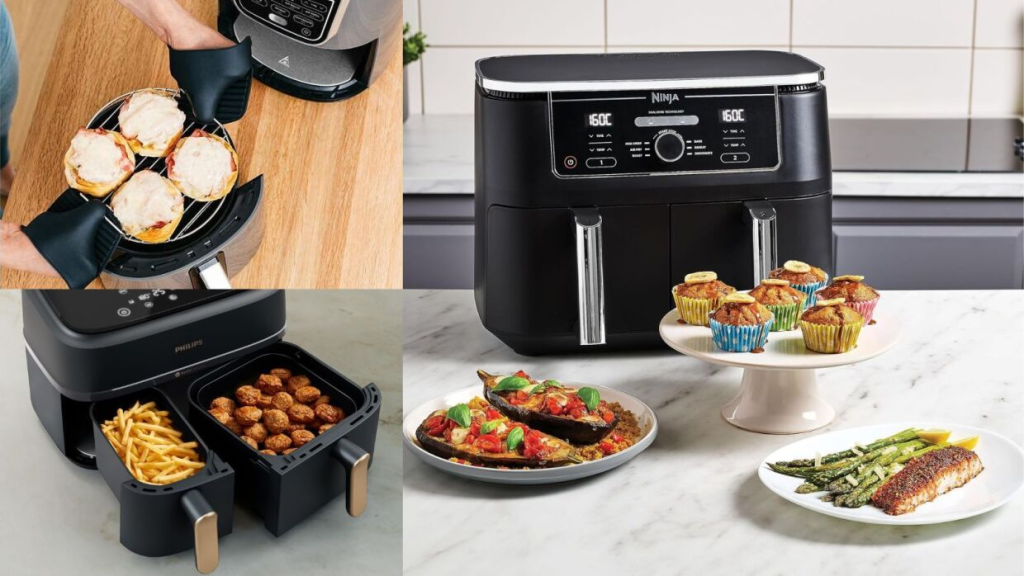
- 2–3 quart / 2–3 L (small): 1–2 servings — great for reheating, small portions, a couple of chicken thighs.
- 3–6 quart / 3–6 L (medium): Best for 2–3 people — fits 3–4 chicken breasts or a tray of fries.
- 6+ quart / 6+ L (large): Fits a whole chicken or family-size batches — choose higher wattage for good crisping.
(Practical tip: when a brand lists capacity in quarts, check photos for realistic spacing; 6 quarts is not “pile to the top” full.)
Safety & certifications — what to look for
- UL / ETL / CE marks: These indicate the appliance was tested against safety standards for electrical/fire hazards — prefer models with these marks.
- Material certifications: Look for “PFOA-free” or “PFAS-free” claims on coatings and “food-grade” labeling for contact surfaces. Concern about PFAS and similar chemicals is the reason many manufacturers removed older treatments; check manufacturer documentation.
- Practical check: If a product lacks visible certification marks in photos and the manual doesn’t list standards, treat that as a red flag.
Quick cleaning and maintenance checklist
- Wipe interior after every use to avoid burnt residue.
- Remove basket/rack and soak if food is stuck; check dishwasher compatibility.
- Inspect the heating element for grease build-up monthly and clean with a soft brush when cool.
- Replace nonstick baskets when coating is scratched through.
Short buying checklist (one-line copy for product pages)
- Right capacity for your household — not just marketing photos.
- Wattage matches the volume (see wattage guidance).
- Basket/parts are easy to remove and dishwasher-safe.
- Safety certification present (UL/ETL/CE).
- Reasonable warranty and visible customer support.
FAQs (short answers ready for rich snippets)
Q: Can I use parchment paper in an air fryer?
A: Yes — but only the heavy-duty kind with holes or with the food weighing it down. Don’t put loose parchment in a preheating unit; the fan can suck it up.
Q: Is it okay to use aluminum foil in an air fryer?
A: You can, for things like drip-catching or wrapping seasoned veg, but avoid blocking airflow. Secure foil under food so it doesn’t fly around.
Q: Can I cook raw meat and vegetables together in the same basket?
A: It’s best not to. Juices from raw meat can contaminate veg and change cooking times. If you must, place veg above meat on a rack so drips don’t touch.
Q: Are silicone air-fryer liners safe to use?
A: Yes — silicone mats designed for high heat are fine. Make sure they’re rated for the temperatures you’ll use and won’t block airflow.
Q: Can I bake a loaf of bread or a cake in an air fryer?
A: Absolutely. Smaller loaves, muffins and quick cakes work well — use shallow pans and check doneness early; browning can happen faster.
Q: Can I use an air fryer in an RV, camper, or boat?
A: Often yes, if your electrical system supports the wattage and you follow ventilation and safety rules. Confirm with your vehicle’s electrical specs first.
Q: Is it safe to plug an air fryer into a power strip or surge protector?
A: Not recommended. Air fryers draw significant current; plug them directly into a properly rated wall outlet to avoid overheating the strip.
Q: Do air fryers emit smells that linger in the house?
A: They can — especially after cooking strongly aromatic or greasy foods. Running it with a lemon slice or wiping it down after use reduces lingering odors.
Q: Can I use metal utensils inside an air fryer?
A: Yes, but avoid scraping nonstick surfaces. Use wood, silicone or nylon tools to extend the life of coated baskets.
Q: Will an air fryer produce enough steam to fog up my kitchen windows?
A: Not usually. Most moisture escapes as warm air; you might see a little humidity, but it’s far less than boiling large pots on the stove.
Q: Can an air fryer be used to dehydrate fruit or jerky?
A: Some models have a dehydrate function or low-temp settings that work for thin slices. Results vary — thin, uniform pieces work best.
Q: Are air fryers loud?
A: They make a steady fan noise; some units are whisper-quiet, others more noticeable. If noise matters, check third-party reviews that report decibel levels.
Q: Can I use an air fryer to reheat pizza and keep the crust crispy?
A: Yes — brief time at moderate heat crisps the base without making toppings soggy. Use a rack for airflow under the slice.
Q: Can air fryers replace a microwave for everyday reheating?
A: For many foods, yes — air fryers reheat with better texture. Microwaves still win for liquids and very quick heating.
Q: Can I leave an air fryer running unattended?
A: It’s best to stay nearby while it’s running. Like any appliance, it’s safer to be present in case of smoke, spilled grease, or malfunction.
Q: Are refurbished air fryers worth buying?
A: They can be if sold by the manufacturer or a reputable retailer with a warranty. Avoid unverified refurb sellers without return coverage.
Q: Do I need special pans for an air fryer?
A: No. Small metal or silicone pans that fit the basket are fine. Avoid very deep, heavy pans that block airflow.
Q: Can I use my air fryer to toast nuts or seeds without burning them?
A: Yes — use lower temperature, shake or stir often, and watch closely; they go from toasted to burnt quickly.
Q: What should I do if my air fryer smokes when cooking fatty foods?
A: Pause and drain excess grease if possible, lower the temperature, and add a small piece of bread or a bit of water underneath to catch drips (depending on model). Also clean splatter from the heating area.
Q: Can air fryers cook frozen foods without thawing?
A: Most handle frozen items well and often produce better texture than an oven, but increase time slightly and check texture early.
Q: How can I tell if my air fryer is heating evenly?
A: Cook a simple test: place similar pieces of potato or bread in a ring and rotate once mid-cycle. Uneven browning indicates hot/cold zones or overcrowding.
Q: Is it safe to use an air fryer around children or pets?
A: With common sense yes — keep curious hands and tails away while it’s running and don’t place it at edge of counter where it can be pulled.

