Walking down the fencing aisle at the hardware store can be confusing. You see bags of “brace bands” and “tension bands.” They’re both metal, they both look kinda curly, and they’re both for a chain-link fence. So, can you just grab either one and call it a day? Absolutely not. Using the wrong one is like using a staple when you need a nail—it might seem to work for a second, but it’s going to fail spectacularly. Let’s clear up the confusion for good.

- Short Answer: No, they are not the same thing.
- Tension Band’s Job: To anchor the chain-link fabric to terminal posts. It handles massive horizontal tension.
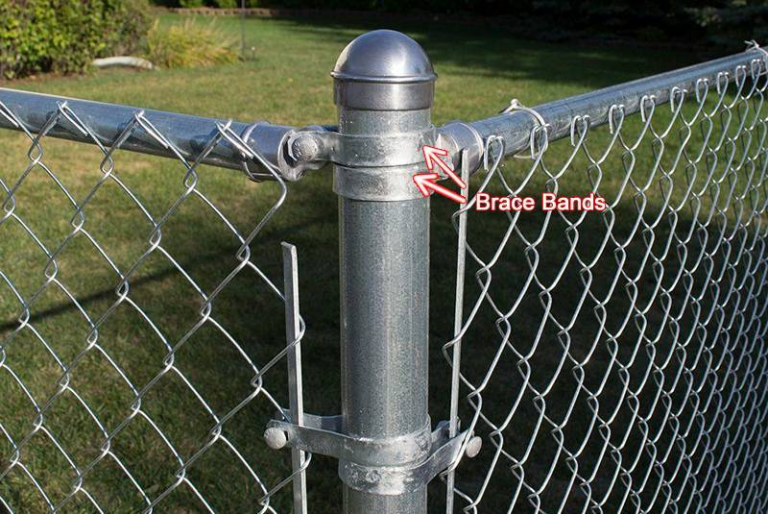
- Brace Band’s Job: To connect the horizontal top rail to the posts. It provides vertical support.
- Not Interchangeable: They are designed for completely different forces. Swapping them will lead to a weak, failing fence.
- Easy to Tell Apart: A tension band has a flat, bolt-ready loop. A brace band is often a rounded cap.
- Location Matters: You’ll find tension bands only at the end/corner/gate posts. Brace bands can be on any post that has a top rail.
Table of Contents
Introduction
The One-Sentence Answer
Tension Bands: The Anchor
Brace Bands: The Connector
Side-by-Side Comparison
What Happens If You Use the Wrong One?
Frequently Asked Questions (FAQs)
The One-Sentence Answer
Let’s get right to it: No, a brace band and a tension band are not the same; they are two completely different pieces of hardware with two totally different jobs.
If you take away one thing from this article, let it be that. They are not substitutes for each other. Knowing the difference between a brace band and tension band is crucial for building a fence that actually stands up straight and lasts more than one season.
Tension Bands: The Anchor
Think of a tension band as the heavy-duty anchor. Its one and only job is to handle the intense, pulling force of the chain-link fabric.
- What it looks like: It’s a sturdy, flat metal band with a special loop or tab that’s designed to hold a carriage bolt.
- Where it goes: It is used exclusively on terminal posts—that is, your end posts, corner posts, and gate posts.
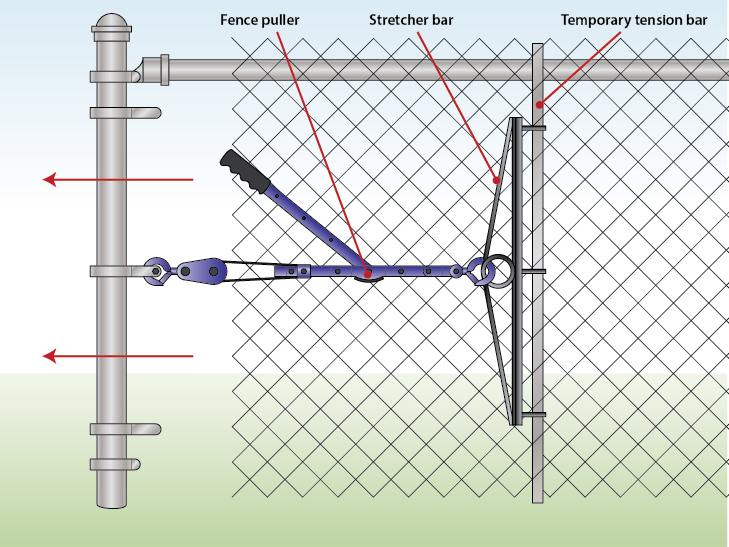
- What it does: You slide the tension band onto the post, then you bolt a flat metal “tension bar” (which has the end of the chain-link fabric attached to it) directly to this band. This connection transfers all the stretching force from the fabric into the post.
- How many: You use three per terminal post to distribute this huge force evenly.
Without a tension band, your fence fabric has nothing strong to pull against, and it will sag or pull right off the post.
Brace Bands: The Connector
Now, think of a brace band (sometimes called a rail end band) as the connector. Its job is much simpler but still important.
- What it looks like: It’s often a rounded, cap-like piece of metal without a bolt hole. Some styles have a built-in loop for the rail to slide through.
- Where it goes: It can be used on any post that supports the horizontal top rail—that includes terminal posts AND the line posts in the middle of your run.
- What it does: It simply holds the end of the top rail in place against the post. It provides vertical support and keeps the rail from moving around. It is usually secured with a small screw or just pressure.
- How many: Typically, you use one per rail end on a post.
Its job is about support, not strength under massive tension.
Table: Brace Band vs. Tension Band – A Quick Guide
| Feature | Tension Band | Brace Band |
|---|---|---|
| Primary Function | Anchors the chain-link fabric | Connects the top rail to the post |
| Handles | Tension (Horizontal Pull) | Support (Vertical Load) |
| Used On | Terminal Posts Only | Terminal & Line Posts |
| Key Identifier | Has a loop for a carriage bolt | Rounded cap, often with a set-screw |
| Quantity per Post | 3 | 1 (per rail end) |
What Happens If You Use the Wrong One?
This is where the lesson becomes critical. Mixing up these parts will compromise your fence’s integrity.
- Using a Brace Band as a Tension Band: This is the most common and disastrous mistake. A brace band is not designed to handle tension. If you try to use it to secure the tension bar, the incredible pulling force from the stretched fabric will either:
- Bend the weak brace band.
- Rip the screw right out.
- Cause the entire end of your fence to sag and collapse.
- Using a Tension Band as a Brace Band: This is less common and mostly just a waste of a more expensive part. A tension band is overkill for just holding a top rail and might be trickier to fit.
The rule is simple: use the right tool for the job.